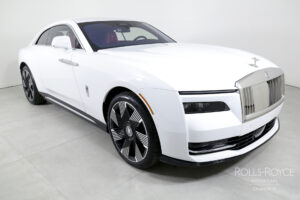
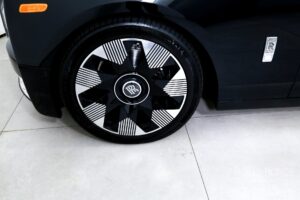
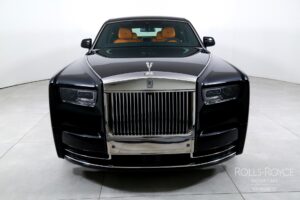
Every quality a luxury car promises, the glide, the silence, the effortless straight-line poise, is delivered through four patches of rubber no larger than your hand. When wheel alignment drifts even a few fractions of a degree, or when tires wear unevenly for want of rotation, those promises quietly erode: the steering develops a pull, a hum creeps into a cabin engineered for silence, and tires worth more than most monthly mortgage payments wear out years early. For Rolls-Royce owners and drivers of other fine marques near Gastonia, the answer sits a short run up I-85: the factory service operation at Rolls-Royce Motor Cars Charlotte, 1316 South Tryon Street in Charlotte’s South End.
Why Alignment Is Different on a Luxury Car
Weight, Wheels, and the Cost of Being Wrong
Alignment on an ordinary car is maintenance. On a luxury car it is asset protection. Consider the physics: a Cullinan or a Spectre carries roughly three tons through every corner, riding on wheels up to 23 inches wearing low-profile, often bespoke tires that can cost well over a thousand dollars apiece. On machinery like this, a small toe error that would slowly scrub an economy tire will devour the inside edges of premium rubber in a few thousand miles, while a modest camber fault turns a serene highway cruiser into a car that tramlines and tugs. The heavier and more capable the vehicle, the faster misalignment converts into expense, and nothing on the road is heavier, more capable, or more expensive to shoe than the cars this facility was built to serve.
Systems That Depend on Perfect Geometry
Modern luxury cars also make alignment a systems procedure rather than a turn of a wrench. Air suspension must be set to precise ride heights before geometry can even be measured, because the specifications change with the height of the car. Rear-wheel steering, fitted to the Phantom, Cullinan, and Spectre, means the back axle has its own alignment and calibration requirements that a two-wheel alignment rack simply cannot address. And the forward cameras and radar behind driver assistance features are calibrated to the vehicle’s thrust line, so a proper alignment on these cars includes confirming those systems still see the world correctly afterward. This is why factory specifications, factory procedures, and technicians trained on these exact platforms are not luxuries in themselves. They are the minimum standard the engineering demands.
The Signs Your Car Is Asking
Alignment rarely fails loudly; it whispers. A steering wheel that sits slightly off center on a straight road. A gentle, persistent drift toward one lane edge. Feathered or inner-edge wear you can feel by running a palm across the tread. A new sensitivity to pavement grooves, or a faint vibration that was not there last season. Around Charlotte and Gastonia, where winter potholes, I-85 expansion joints, and the occasional curb encounter are facts of life, any one of these signs after an impact is reason enough for a precision check. Catching the drift early costs a service visit. Ignoring it costs a set of tires, and on these cars that is a very different number.
Tire Rotations: The Small Service with Serious Returns
Why Rotation Matters Most on Heavy, Powerful Cars
Tire rotation exists because no car wears all four corners evenly, and luxury vehicles wear them less evenly than most. All-wheel-drive machines like the Cullinan load their tires differently front to rear, while the Spectre adds the modern accelerant: enormous electric torque delivered instantly through nearly 6,600 pounds of motor car, a combination that works tires harder than any combustion equivalent. Regular rotation on the schedule the factory prescribes equalizes that wear, preserving the even tread depth that keeps an all-wheel-drive system happy, extending the life of very costly rubber by thousands of miles, and, just as important in a Rolls-Royce, preserving the acoustic smoothness that uneven wear steadily destroys. It is the least expensive service on the menu and among the most valuable.
Done Correctly for the Fitment You Actually Have
Rotation on cars like these is also a matter of knowing what not to do. Many luxury and performance vehicles wear staggered fitments, wider rear tires than front, which changes the permissible rotation pattern entirely, and directional tires add their own rules. The service team here reads the fitment before touching a wheel, follows the correct pattern for the specific car, handles finished wheels with protective procedures, torques every fastener to specification with calibrated tools, and resets the tire pressure monitoring system so the car’s electronics agree with reality when it rolls out. Details like these are precisely the difference between a tire shop and a factory service operation.
The Rolls-Royce Standard, Offered to Every Fine Marque
While the badge over the door is the most demanding in motoring, the service department at 1316 South Tryon welcomes owners of other luxury and performance vehicles who want their alignment and tire work held to the same standard: factory-level precision equipment, technicians accustomed to six-figure machinery, and a culture in which a wheel is never leaned against a wall and a torque figure is never guessed. If your car is the kind you would rather not hand to a volume tire chain, this is the alternative it deserves, and appointments are straightforward to arrange.
Book Your Alignment or Rotation from Gastonia
Gastonia to South End is an easy half hour up I-85 or US-74, and the visit pairs naturally with any other service your car is due. Schedule your appointment online or call the team at (704) 248-7766 to arrange an alignment check, a rotation, or both, and mention any symptom you have noticed so the technicians can road-test for it specifically. Questions before booking are always welcome through the contact page. Rolls-Royce Motor Cars Charlotte is located at 1316 South Tryon Street, Charlotte, NC 28203. Your car was engineered to travel in a perfectly silent straight line. A morning with this team keeps it that way.